Join us on a wonderful journey into the world of Cetaceans, those mysterious animals that spend their entire lives in water.
MEMBER
Dive to the greatest depths and discover the whales, the Blue whale, the Right whale, Sperm whale, Humpback, Sei, Gray, Bowhead, Fin, Minke, Orca, Dolphins and more. Pick your favourite whale or dolphin and find out what it is doing, what it looks like and where it lives.
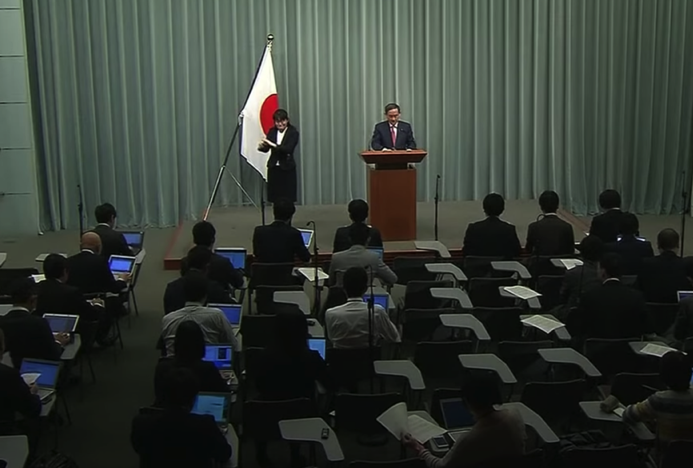
Japan Secedes from the International Whaling Commission (IWC)
Now that Japan has left the IWC, the country will be unable to catch any whales in the Antarctic Ocean, where half the country's whaling for what it called scientific research purposes was conducted. This is good news. However, according to Japanese government sources, the country now allows commercial whaling in its nearby seas and within its exclusive economic zone. . .
Japanese Push for Limited Commercial Whaling
[Joji_Morishita]
Japan's chief whaling negotiator and IWC Chairman, Joji Morishita told Australian media that the International Whaling Commission (IWC) cannot continue on the same path of dispute and deadlock. ABC News (August 3, 2018) And the only way to break this deadlock is to change the paradigm. . .
Singing With Whales
Discover how whales respond when we share our songs with them. Chip Richards
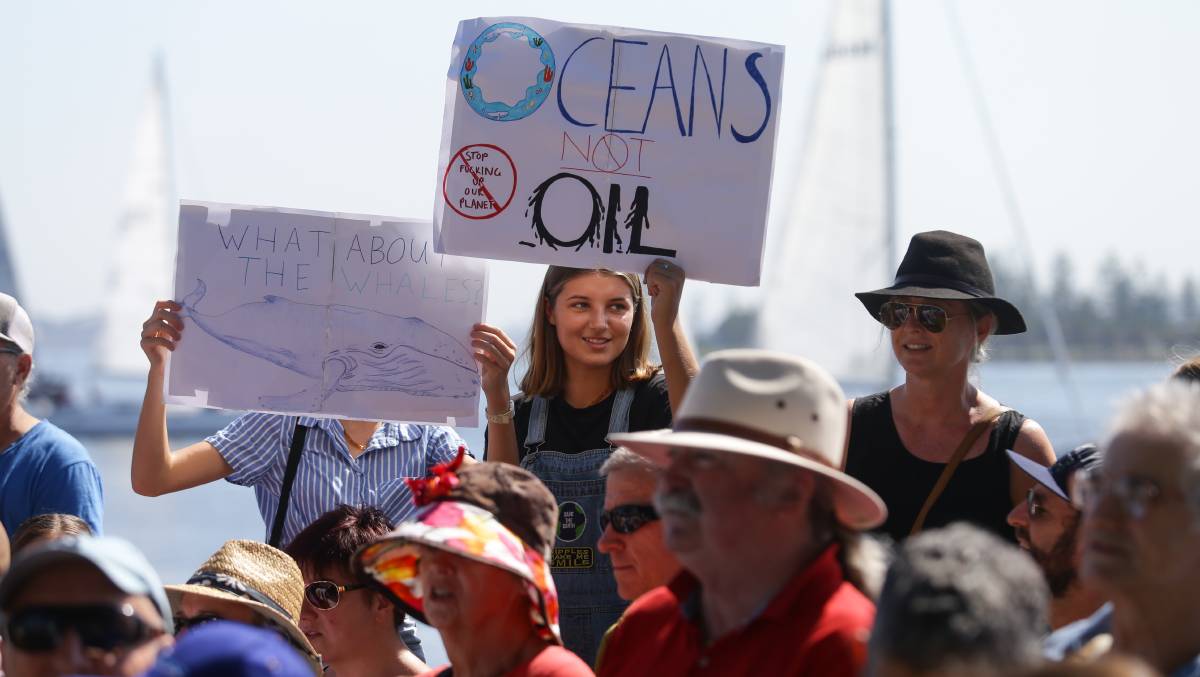
NSW opposes Seismic Testing
Australian State (NSW) opposes seismic testing for oil off it's shores but Federal regulators in Canberra gave the approval. . .
Sanctioned Animal Abuse in Canada's Marineland
Despite years of bad press and seemingly credible allegations of animal abuse, it comes as little surprise that cruelty charges laid against Marineland by the Ontario Society for the Prevention of Cruelty to Animals (OSPCA) were withdrawn. . .
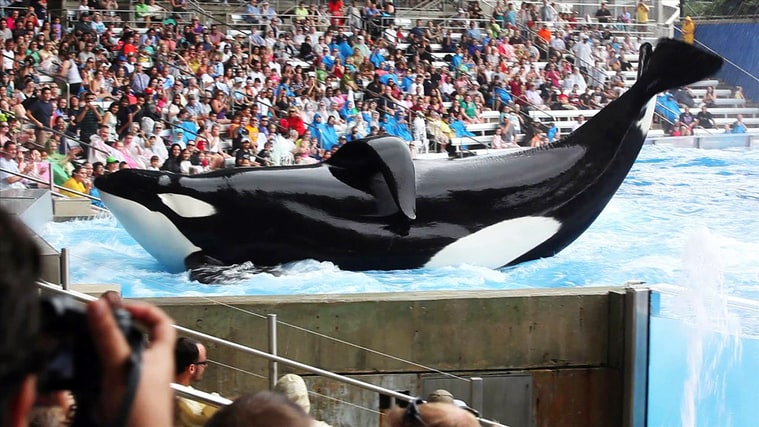
Tilikum Dead at 36
SeaWorld Orlando's most famous killer whale, Tilikum, who inspired the documentary Blackfish, has died, the theme park announced in a statement on its website January 6, 2017. He was estimated to be about 36 years old.
Seaworld states: "Tilikum was near the high end of the average life expectancy for male killer whales according to an independent scientific review." Can this be true. . .
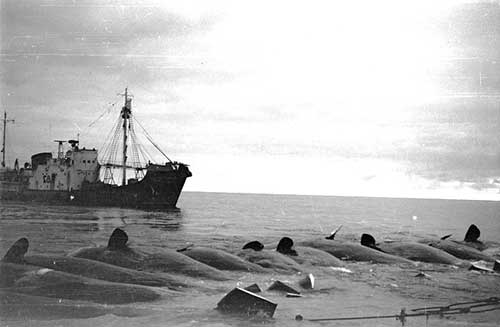
The Soviet Union Killed Tens of Thousands of Whales for Virtually No Reason
In just a few decades, tens of thousands of whales were slaughtered by the Soviet Union in what the Pacific Standard Magazine, called "one of the fastest decimations of an animal population in world history - and happened almost entirely in secret."
The whaling system was mortally wounded by inefficiency, gross waste, and "runaway socialistic competition," as Ivashchenko, Clapham, and Brownell noted in their research paper.
While it's unclear how many whales were killed by the Soviets, it's believed that at least 45,000 were slaughtered between 1946 and 1986. . .
Humpback Whale Deaths in Hawaii
Wildlife officials are concerned that six humpback whale carcasses have washed up onto Hawaii shores since November. That's double the number typically found in a season, which runs from November to May. . .
Rare Omura whale Sighted in Queensland
A Tour group spotted the whale off Mission Beach (Queensland), an unusual sighting outside the usual whale season.
The Omura whale was first identified by Japanese researchers as a species in it's own right in 2003, and it was genetically confirmed as a separate species in 2006. . .
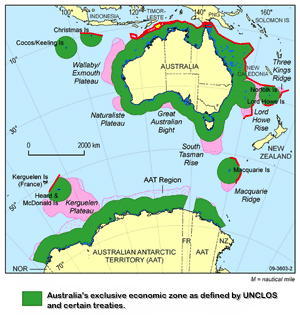
Great Australian Bight Drilling Threat Returns
After BP Oil cancelled it's plan to drill in the Bight another company has been given a permit to explore for oil in the marine reserve, sparking calls from environmentalists for a moratorium on new licences.
Karoon Gas Australia announced to the Australian Stock Exchange that it had been approved to explore for oil in "17,793 square kilometres of Australia's most active and prospective frontier oil exploration province" the Ceduna sub-basin.
"It's outrageous the National Offshore Petroleum Titles Administrator is issuing more exploration permits in the Great Australian Bight considering the massive opposition to BP's plans to drill for oil in the Bight," said the Wilderness Society's South Australian director, Peter Owen. . .
Is that All We get from the Australian Prime Minister... Disappointed?
Australian PM Malcolm Turnbull has said he is "very dis-appointed" by Japan's decision to resume Antarctic whaling. Chief Executive Michael Kennedy (HSI) says, "Japan always claimed it was doing its work legally. Well our court case in 2004 and the ICJ in 2014 proves that nothing they do in our view is at all legal."
It is time to act. The Australian Government must stand up and stop the whalers who are poaches heading to a Whale Sanctuary to murder and butcher the animals the Sanctuary protects. These poaches in their Factory Ship, the Nisshin Maru, must be turned back to Japan without killing one whale. . .
Japanese Southern Ocean Whaling Ruled NOT Scientific
The Inter-national Court of Justice (ICJ) in The Hague announced their binding decision on 31 March, 2014 in the landmark case of Australia v. Japan, ruling that Japan's JARPA II whaling program in the Antarctic is not for scientific purposes and ordered a temporary halt to the whaling program and not to issue whaling permits at least until the program has been thoroughly revamped. . .
Iceland ships 2,000 tons of endangered fin whale meat
The Inter-national Fund for Animal Welfare (IFAW) raised the issue in Iceland after learning that Loftsson's stockpile of fin whale meat was being loaded onto the Alma cargo vessel in Hafnarfjordur Harbour near ReykjavÃk, bound for Japan.
Fin whales are listed as endangered on the IUCN Red List. Ports and carriers in Europe publicly rejected the whale meat trade by returning containers, to Iceland. A total of 280 fin whales were killed in Iceland's waters between 2006 and 2010. . .
International Anti-whaling Campaign
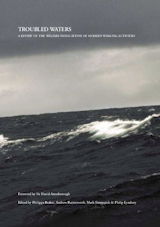
The Whalewatch report, Troubled Waters, was published March 9th to mark the start of the global campaign against whaling.
Britain's best-known naturalist, Sir David Attenborough, stresses the point in his foreword to the report. "The following pages contain hard scientific dispassionate evidence that there is no humane way to kill a whale at sea," says the broadcaster . . .
Whales are Not the Major Causes of Dwindling Fish Stocks
N.O.A.A. US Department of Commerce - Today's marine science community has enough expertise and experience with the complex ocean ecosystem to recognise that the "competition" claim is oversimplified and the hunting proposal is biologically unsound.
As a whole, whales do not eat "large quantities of fish as food," nor do they threaten the health of the world's limited marine fish resources. Some whale species prey on fish, but on fish that humans do not consume. In truth, it is humans who continue to threaten the world's stocks through overfishing and reluctance to allow stocks to naturally replenish. . .
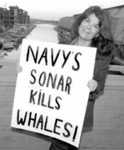
Low frequency active sonar is based on very low frequency sound [100-1000 Hz] can travel great distances and detect quiet submarines. The system uses intense sound. The US Navy has given a figure of sounds as loud as 235 decibels generated by massive sound transmitters towed behind TAGOS-class ships. The noise level of a jet engine is about 120 decibels. . .
The Allankay the latest to the Sea Shepherd Global fleet. Photo: Sea Shepherd
The Sea Shepherd vessel Allankay departed Wellington, New Zealand, on a 5,000-nautical-mile journey back to Antarctica. With a mission to track down and expose the actions of the industrial krill fishing fleets that are devastating this fragile ecosystem.
This is their third year in a row defending Antarctica from the krill industry. But this campaign is different. This time, they're heading deep into the Antarctic, later in the season than ever before. With tourist vessels gone and the seas at their roughest, the massive krill trawlers assume no one is watching. But we will be there.
This time, there are scientists on board. They will document the impact of industrial krill fishing on the Antarctic ecosystem. By gathering real-time scientific data, they will strengthening the case against this destructive industry and push for urgent action.
Over the coming weeks, Sea Shepherd will be sharing their journey to Antarctica.
A Big New Marine Park for the East Antarctic?
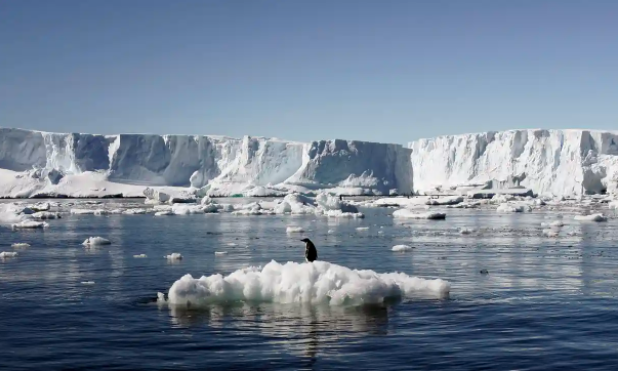
An Adelie penguin near the French station at Dumont d'Urville. Photograph: Reuters
Australia and the European Union have proposed an East Antarctic Marine Protected Area to contribute to a representative system of Antarctic MPAs. However, the Commission for the Conservation of Antarctic Marine Living Resources is unable to agree on a plan.
The proposed marine park would conserve examples of biodiversity in the high latitudes of the Indian sector of the Southern Ocean. The area contains distinctive deep water flora and fauna and supports important ecosystem roles, such as feeding areas for marine mammals, penguins and other seabirds.
It would also provide scientific reference zones to assist with understanding the effects of fishing outside the marine protected area as well as the consequences of climate change on Antarctic and Southern Ocean ecosystems. . .
Whale hunting in Iceland has been cancelled this year due to financial difficulties and its social distancing requirements due to the Coronavirus outbreak.
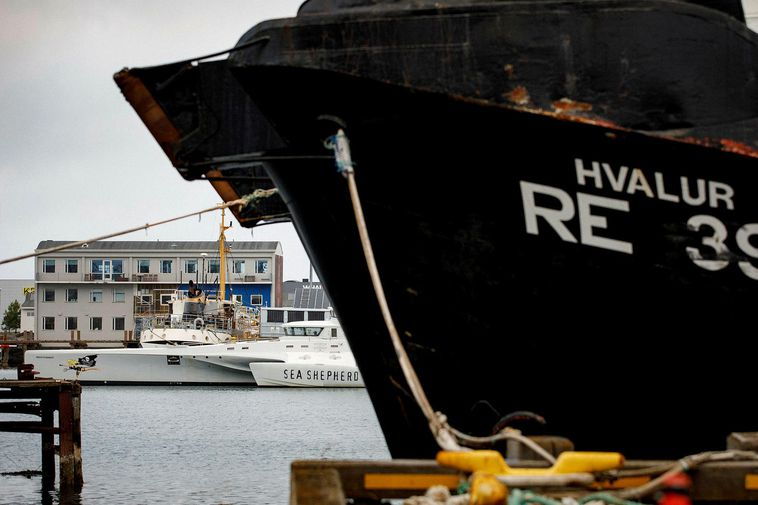
Icelandic whaling company IP-Utgerd announced April 24 that it has ceased whaling completely while the whaling company Hvalur hf, now the only company that hunts fin and minke whales and owned by whaler Kristjan Loftsson, will not hunt whales or process whale meat in Iceland for the second year in a row.
IP-Utgerd, which mainly targeted minke whales (Balaenoptera acutorostrata), cites its boats were forced to go further and further offshore due to extended no-fishing zones off the Icelandic coast. Hvalur, which hunts threatened fin whales (Balaenoptera physalus), is ceasing operations because of stiff competition with Japan, among other reasons, according to Kristjan Loftsson, the company's CEO.
This is terrific news that for a second straight year, vulnerable fin whales will get a reprieve from Kristjan Loftsson's harpoons. Now is the time for Loftsson to hang up his harpoons and for Iceland to become an ethical whale watching, not whale killing nation. He could successfully convert Hvalur's whaling facility into an educational center.
Loftsson could make something really educational and lasting from it and tell visitors and the Icelandic community about the history of Iceland's whaling, and about his family business. This has been done in the past in Australia. When Australia killed their last whale, the last whaling station in Albany was transformed into a museum. This could work very well in Iceland. . .
ERRONEOUS Decision to Delist Humpback Whales
Photo: National Geographic
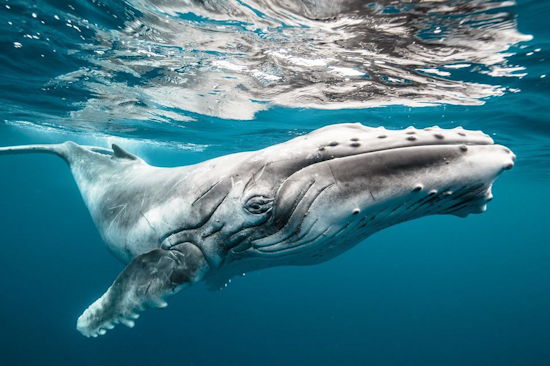
News media are reporting that the United States Federal authorities (National Marine Fisheries Service) have taken most humpback whales off the endangered species list, saying their numbers have recovered through international efforts to protect the giant mammals.
The US decision to delist Humpback whales is based on a new erroneous theory that there are 14 Humpback Whale populations in the worlds oceans and although that may appear true today, historically, there were only TWO populations i.e. Southern & Northern Hemisphere. By creating 14 individual Humpback populations the US NMFA has "juggled the books" and manufactured this misguided plan based upon ficticious Humpback Whale Distinct Population Segements (DPS) that it devised in 1996.
A Whalemeat DNA study by marine biologists at Stanford University in California, found that the genetic diversity of whales is so large that it can only mean that past population sizes were much bigger than anyone had estimated. The analysis of humpback whale DNA, enabled the marine biologists to estimate the past population size of breeding females alone must have been between 125,000 and 250,000 individuals and since mature breeding females make up about one sixth to one eighth of a whale population, these numbers suggest a global humpback whale population size [in the past] of about 750,000 to 2 million animals.
WOTN calculates 64% to 74% of Humpback whales are missing from the Southern Hemisphere today... but "Today's news is a true ecological success story," said Eileen Sobeck, assistant NOAA administrator for fisheries. She hopes we will believe her. . .
FACT: Endangered Whale Species are RECOVERING... not RECOVERED.
FACT: Japan does NOT have a TRADITION of SCIENTIFIC WHALING.
Where is the Japanese Whaling Fleet?
What Are Whales Telling Us About Earth?
Recent reports clearly show that the whales are helping researchers determine atmospheric science, Arctic oceanography, the extent of global warming, marine food web nutrition and record breaking migration patterns.
From high-resolution photographs and studying whale skin samples, they have concluded that the whales are becoming sunburnt during the time they are spending at the surface. Blue whales, who have fairer skin than most whales, suffered significantly more than the much darker fin whales. And sperm whales, which spend a considerable amount of time on the surface, breathing and socializing for hours at a time were also vulnerable to sun damage. The study found that the lesions and sunburnt cells on blue whales had worsened considerably from an earlier surveys...
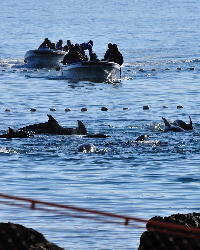
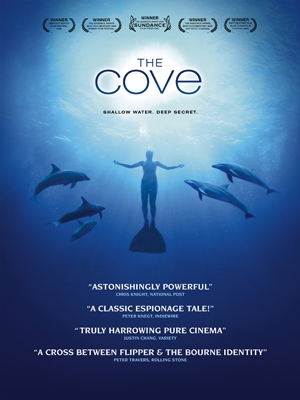
In the remote village of Taiji, Japan a team of activists and filmakers witness and document activities deliberately being hidden from the public: More than 20,000 dolphins and porpoises are being slaughtered each year and their meat, containing toxic levels of mercury, is being sold as food in Japan, often times labeled as whale meat.
"The world today will either be stepping forward into an era where conservation and the environment really matter, or it will be stepping back into the Dark Ages, where the people of the world think that the slaughter of whales using grenades, electric lances and shooting them with rifles is something that we should accept". Ian Campbell, Australian Environment Minister - 57th IWC AGM, Monday, June 20, 2005
"If all nations in the world took 1000 whales each year, the stocks would soon be exhausted. What gives one nation the right to a larger portion of the resources of the planet that all nations hold in common?"
Sir Geoffrey Palmer, NZ Commissioner to the IWC.
World's Oceans once Teemed with Whales
The oceans once teemed with many more now endangered marine mammals than previously thought, new genetic studies of whales suggest.
Whalemeat samples bought from a Japanese sushi market and analysed by scientists indicate that experts have seriously underestimated the size of the populations that roamed the seas before industrial- scale hunting began more than a century ago. The numbers of some species may have been 10 times greater than previously calculated.
The findings refute suggestions by whaling nations such as Japan that a resumption of hunting is justified by the increase of many whale populations beyond their natural size, the researchers said. . .
Norway's Whaling Again Under Fire
Norwegian whaling ship with a minke whale butchered on deck. Photo: WSPA/EIA
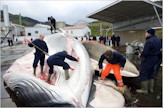
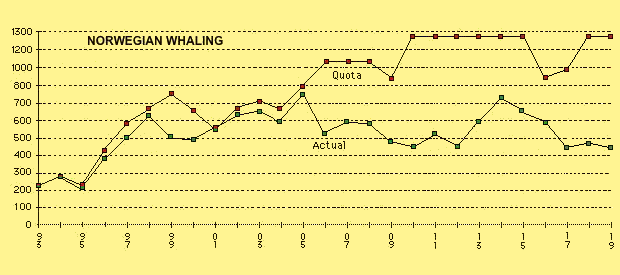
Norway is now the leading commercial whale killing nation in the world, and in the past two years killed more whales than Iceland and Japan combined. The government quota for 2017 was set at 999 animals, up from the 2016 quota of 880. However, only 432 Minke whales were slaughtered by the end of the season making the issuance of a quota completely stupid.
Norwegian exports of whale meat and blubber have been transiting regularly through E.U. ports en route to Japan for the past several years, says Kate O'Connell, Marine Wildlife Consultant at the Animal Welfare Institute. The most recent shipment of 2,948 kg of whale products was shipped from Ålesund, Norway to Hamburg, Germany in early October by a cargo vessel called the Berta. At Hamburg, the shipment was loaded on board the MOL Beacon, stopping at Le Havre and Malta for eventual offloading in Kobe, Japan, in November.
Given that the E.U. is opposed to commercial whaling and the trade in whale products, a number of organizations, including the Animal Welfare Institute, Oceancare and ProWildlife have called for changes to be made to E.U. regulations to so that the transit of whale products through E.U. ports is made illegal and enforcement authorities can act against these activities.
The hunting season goes from April 1 to September 30.
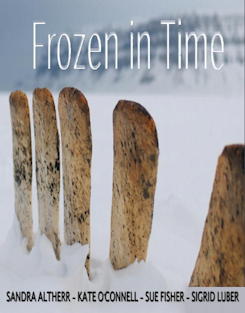
Produced by the Animal Welfare Institute (AWI), OceanCare and Pro-Wildlife, details Norway's undermining of the International Whaling Commission (IWC) ban on commercial whaling and exposes the growth of its overseas trade in whale products.
Whales killed annually since Norway resumed commercial whaling
The 'Grindadrap' - Faroe Islands Declare WAR on Whales
Video: Ross McCall - Actor, screenwriter, filmmaker, activist
More than 1000 long-finned pilot whales are killed in the Faroese Islands, a Danish protectorate, every year by wealthy islanders, who have no subsistence need for whale meat but to consume it as a cultural prerogative.
The hunt, known as a "grind," is horrifically cruel. North Atlantic and migratory North Sea Pilot whales are driven into shore by fishing boats, then roped and hauled on until they beach themselves.
Actor Ross McCall, in his
Huffington Post article says, "Truthfully, I've looked, I've listened. I've allowed people to voice their side. A high percentage claim to be indifferent about the Grind. Fine if it continues, fine if it ends. But, for the staunch supporters, it ultimately comes down to the fact that this is something the whalers and locals enjoy. Something that gets the aggression out. And something they seem petrified of letting go". . .
1AbZiviLVmfybEFWoyoANnXoGCKLotFQA3
Support Whales On The Net DONATE Bitcoin
This HOME PAGE is presented by WHALES in DANGER with the desire that, through information and education, we will foster a sincere love of this earth and stop man's inhumanity to whales. "Whales in Danger" strives, with this web site 'Whales on the Net', to keep you informed with news and views on the subject of whales and dolphins (Cetaceans) from around the world.
In The End We Will Conserve Only What We Love. We Will Love Only What We Understand. We Will Understand Only What We Are Taught - Baba Dioum
<-- If you have a whale question visit our Whale FAQ before you post
<-- Before you leave would you like to leave a message? Click on our Mail Box (Give us your email address if you would like an answer)
The pages accessible through this service contain material that is not copyrighted by Whales in Danger and may be copyrighted by others; such material in general may not be an exact and up-to-date copy of that found in the original pages. No responsibility is assumed by Whales in Danger for the use of information provided in these pages. We reserves the right to make changes to this information without notice. Reproduction of information contained within these documents in whole or in part, including any text, or graphics, may be prohibited by the author. Any company and product names mentioned are trademarks or registered trademarks of their respective companies.
Updated: 14 March, 2025
Latest Update: News: Back to Antarctica Whales in Danger Information Service Created: 1 October, 1995
Tel: (+61) 448 883 234



 PAGES
PAGES